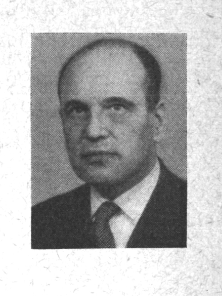
Geert Werner Salomon was born on 6th of December 1906 in Frankfurt am Main as son of the engineer and business executive Prof. Dr. Bernhard Salomon (1855-1942) and Meta Luise Salomon, née Eichengrün (1869-1942). Both parents were Jewish. Bernhard Salomon was from 1897 to 1933, amongst others, president (CEO) of the Elektrizitäts-Aktiengesellschaft (EAG, formerly W. Lahmeyer & Co.) and later member in the governing board of the German Imperial Postal Authority. The family lived in a company villa at Westendstreet 25 in Frankfurt but was forced to leave it in 1940. The last address was Liebigstreet 53 in Frankfurt.
Before the wedding with Bernhard Salomon on 11th of September 1905, Geert’s mother Meta was married to the lawyer and legal advisor Wilhelm Silvius Rocholl (born 1863), who died in the year 1900 aged only 37 years. From this marriage the daughter Margot (1898-1975) and the son Herbert (1895-1916) arose. Because she allegedly refused to wear the Yellow Star, Meta Salomon was arrested in March 1942 after she had been denounced by an acquaintance. At first she was brought to the female prison in Frankfurt-Preungesheim and three months later to the police prison. In July 1942 she was deported to the female concentration camp Ravensbrück, where she died on 17th of September 1942. In 2010 a Stolperstein (Stumbling Block) has been laid for Meta Salomon in front of Westendstreet 25 in Frankfurt. Her husband Bernhard died on 26th of July 1942 in Frankfurt am Main.
After elementary school Geert Salomon initially attended the Goethe secondary school in Frankfurt am Main, changed to the Wöhler secondary school after one year and passed his school leaving examination (Abitur) there on Easter 1926.
Before he started studies of physics and chemistry at the technical university Munich, he worked for half a year as apprentice at the Machine works Augsburg-Nuremberg (MAN). During his study period of 7 semesters in Munich he also acquired knowledge in the areas of electrical engineering, material science, metallurgy and political economics. He finished his studies at the technical university Berlin. After he wrote his diploma thesis at the Emperor-Wilhelm-Institute in Berlin, he was awarded the degree of a master of engineering (Diplom-Ingenieur, Dipl.-Ing.) on 21st of November 1931. He submitted his doctoral thesis on 5th of May 1933 at the technical university Berlin and received his PhD degree (Dr. Ing.) there on 20th of June 1933 at the faculty for material industry with the rating “Good”.
Because of his Jewish descent it was impossible for him to gain any professional foothold in Germany. Therefore, he went, facilitated by his father, in October 1933 to Switzerland to perform scholarly work there at the technical university Zurich until October 1936. Afterwards he moved to England. At the university of Reading he was able to continue his education in physical chemistry with Dr. W.F.K. Wynne-Jones (1903-1982), who had a professorship there.
Finally, in September 1938 Dr. Geert Salomon moved to The Hague (The Netherlands). He joined the newly established research laboratory of the “Dutch Rubber Growers” in the nearby town of Delft. Together with his colleagues he conducted research activities on the formation, structure, reactivity and the mechanical behavior of caoutchouc ([natural] rubber) and selected synthetic materials. Many of these studies proved to be seminal for the fast developing area of polymer science.
Geert Salomon joined the Frankfurt section of the German and Austrian Alpine Club in 1926. At the time of his application he lived in Munich (Bauerstreet 10), where he just had started his academic studies. There is no evidence about the warrantors required for admission. We do not know if he actively participated in club activities. In the early summer of 1953 he traveled with his wife to Grindelwald in the Bernese Oberland. If Geert Salomon was active in alpine mountaineering here is unknown.
Up to now no evidence for an exit or an exclusion from the club could be found. Therefore it remains unclear for how long he was a member of the Frankfurt section. According to the amendment of the statutes enacted in the year 1934 so-called “non-Aryans” were not permitted within Frankfurt’s section of the Alpine Club any more, unless they were WWI “frontline combatants” or had joined the section before the year 1914. Both did not apply to Geert Salomon, so that he would have been excluded from the Frankfurt section latest at this point in time.
After the German forces (Wehrmacht) had occupied The Netherlands in May 1940, by order of the German occupation authorities Geert Salomon was forced to leave The Hague in September 1940 and to permanently move to Utrecht. On 23rd of April 1943, following a call of the authorities published in the daily newspapers for the province of Utrecht, he had to report to the SS. On the same day he was deported by railway to the concentration camp Hertogenbosch (also known as “Kamp Vught”/”Camp Vught”). On 9th of May 1943 his transfer to the transit camp Westerbork took place. Finally, on 8th of September 1944 he was deported from there to the concentration camp Theresienstadt. His fiancée at that time and subsequent wife Christina Olierhoek later wrote:
“On 23rd of April 1943 he [Geert Salomon, author’s note] left his apartment in my presence and went accompanied by me to the police office to report. At the train station I saw him then getting into a train guarded by the SS. After was for some weeks in uncertainty of his whereabouts, I received by facilitation of the Jewish self-administration in The Hague information about his stay in Westerbork. In September 1944 this connection was disrupted.”
Geert Salomon survived the concentration camp Theresienstadt and returned after his liberation back to The Netherlands. On 16th of November 1946 he married his fiancée Christina Olierbroek in The Hague.
After WWII Geert Salomon joined the newly established laboratory of the “Nederlandse Organisatie voor toegepast-natuurwetenschappelijk onderzoek” (Dutch organization for applied natural scientific research, TNO), a parastatal institution founded already in 1932. Here he continued his theoretical and experimental research activities on caoutchouk/rubber. Since the 1950ies Geert Salomon was also very active journalistically. He was the first editor-in-chief of the professional journal “Wear” (1957-1968). Same attends to the advancement of fundamental and applied knowledge about the type of materials’ wear. The topics reach from the development of basic understanding of wear mechanisms to innovative solutions for practical technical challenges. In his capacity as editor he published around 50 editorials and around 100 articles about reaction kinetics in organic chemistry, polymer science, caoutchouk derivatives and much more. His substantial scientific activities were recognized by a multitude of awards and honorary memberships.
Dr. Geert Salomon passed away on 7th of January 1985, his wife Christina on 14th of December 1988.
Quellenangaben
Sources and Literature
- Hessian Main Public Record Office (Hessisches Hauptstaatsarchiv Wiesbaden) - HHStAW, Dept. 518, No. 20428
- Harmen Blok (1900-2000) in the journal "Wear" (1985), pages 5-6 Zur Erläuterung
- Stolperstein for Meta Luise Salomon, Frankfurt am Main
- Camp Vught National Memorial - Nationaal Monument Kamp Vught